


Crangle
Crangle
When I first opened Crangle, I understood its appeal quickly: it is a focused business app for people who need to think through crane work before a lift begins. Instead of treating planning as a collection of notes, it brings crane range information, lift planning, and calculation into one mobile workspace. I would not describe it as a general productivity app, because its value depends heavily on whether your work involves cranes, lifting operations, or the preparation that surrounds them.
That narrow purpose is also its biggest strength. A person who only occasionally needs a rough lifting reference may find it more specialized than necessary, while someone who regularly prepares or checks lift arrangements can appreciate having a dedicated tool close at hand. In my experience, the best way to use it is not as a replacement for competent site judgment, manufacturer documentation, or formal safety procedures. It works better as a practical planning companion that helps organize the questions that should be answered before equipment and people are committed to a job.
Building a better workflow before opening the app
The most useful change Crangle encourages is a change in order. Many people begin with a crane they already have access to and then try to make the lift fit. That approach can lead to hurried calculations, missing details, and repeated trips between paper notes, reference charts, and a calculator. I prefer to begin with the load, the working area, the required reach, and the conditions that may affect the lift. Only after those points are clear should the crane range chart or lift calculation become the center of the discussion.
That makes the app more valuable when it is used at the start of a planning conversation rather than at the end. For example, a supervisor preparing for a delivery might first gather the load information, identify where the crane can stand, estimate the distance to the placement point, and note obstacles or restricted areas. Crangle can then help turn that rough picture into a more structured check. It does not remove the need to verify the result against the correct equipment documentation, but it can make the initial reasoning less scattered.
I also found that a mobile tool changes who can participate in the early stage. A planner in an office, a site supervisor, and an operator may each approach the same lift from a different angle. Having a crane planning tool available on a phone can make it easier to discuss the same basic arrangement instead of relying on a vague verbal description. The important point is to use the screen as a shared reference, not as permission to skip a qualified review.
Related News

Why WhatsApp Messenger Still Makes Everyday Communication Feel Easy

Jurassic World: The Game Is the Better Dino Tycoon for Strategic Players

Threads in Real Life: Who Should Join, Lurk, or Leave

How SHEIN Turned Shopping Into an Endless Content Feed

How to Make Fortnite Feel Smarter on Mobile

Should You Switch to Microsoft Outlook on Mobile?
Because this is a business app from Crangle, its audience is quite specific. It is aimed at practical work rather than casual learning or entertainment, and the Everyone age rating does not mean that every user is automatically qualified to make lifting decisions. A younger learner or new employee may use it to understand the planning process, but real lifting work still requires training, supervision, and the procedures used by the employer or site.
Starting with the job, not the buttons
A common mistake with specialist calculators is opening them without preparing the inputs. The result is a sequence of guesses that looks precise because it is displayed neatly. I would avoid that with Crangle. Before entering anything, I would write down the load, the intended pick and set locations, the working radius, the height or clearance needs, and any site restrictions that could change the arrangement. This short preparation makes the app more useful and exposes missing information early.
There is a practical trade-off here. A quick estimate may be enough for an early conversation about whether a job looks feasible, but it is not the same as an approved lift plan. If the situation is unusual, the load information is uncertain, or the work environment is changing, I would treat the app’s output as a prompt for further checking rather than a final answer. That distinction is easy to lose when a result appears clean and authoritative on a small screen.
Gallery
Capturing information without creating another paperwork problem
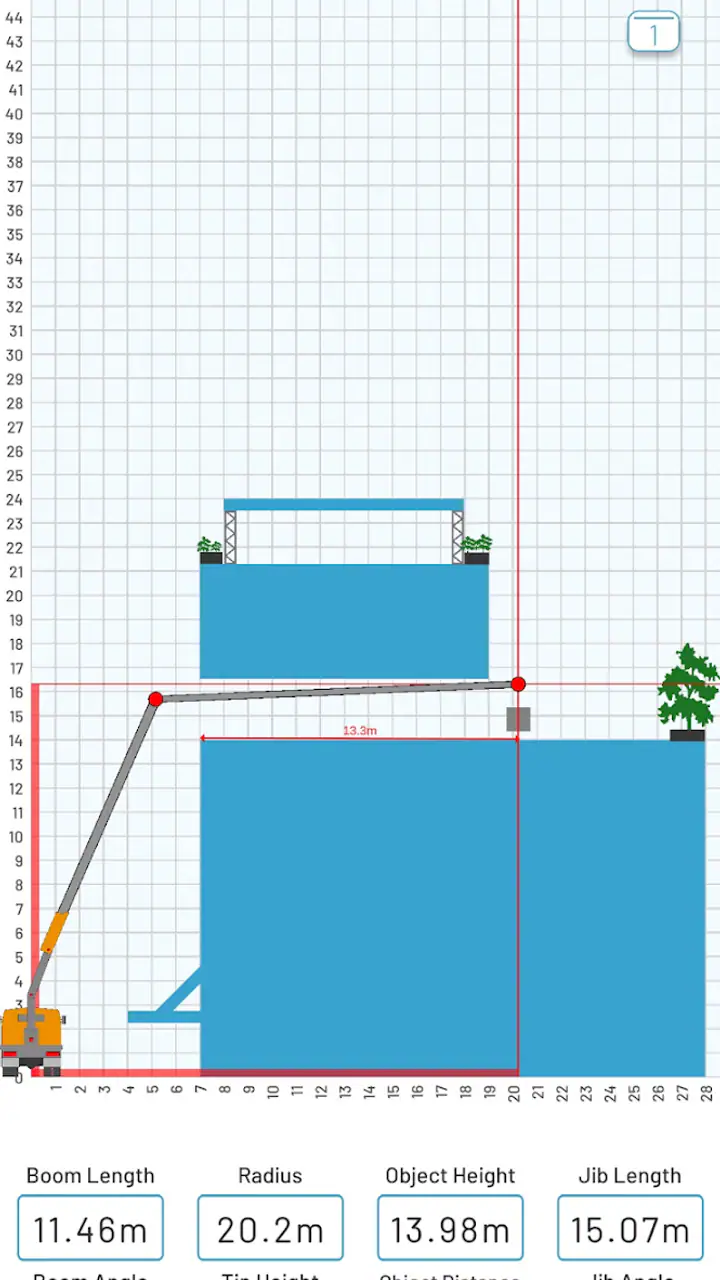
Crangle’s combination of a crane range chart, lift plan, and crane calculator makes sense when the same job moves through several planning stages. I can imagine using the range information to explore an arrangement, using the calculator to test the key figures, and then using the planning side to keep the thinking connected. The benefit is not simply having several tools in one place; it is reducing the chance that an important assumption remains trapped in a separate notebook or conversation.
For a realistic everyday scenario, imagine a small construction team receiving a request to place a heavy component behind an existing building. The first discussion may reveal that the crane cannot stand directly beside the delivery point. I would use the app to examine the reach required from the available setup area, then compare the result with the actual crane documentation and the site plan. If the reach becomes excessive, that is useful information even before a final arrangement is chosen: the team may need a different position, a different machine, a revised delivery method, or a more detailed engineering review.
The non-obvious advantage of this workflow is that an unsuccessful calculation can still be productive. A result that does not suit the intended arrangement is not wasted if it shows which assumption is causing the problem. In that sense, the app can support option testing rather than merely producing a single answer. I would record the reason an option was rejected, because that prevents the same unsuitable position from being reconsidered later by someone who was not part of the original conversation.
Another useful habit is separating known values from estimates. If the load weight is confirmed but the final radius is still being measured, I would keep that distinction visible in my notes and avoid presenting the early result as settled. Mobile tools make it easy to change a value, but they do not automatically tell the next person which value was verified on site and which one was assumed for planning. That human explanation remains essential.
Turning one calculation into a repeatable routine
The app becomes more useful when it supports a consistent routine across jobs. I would use the same sequence each time: describe the lift, gather the required figures, examine the crane range, test the arrangement, and then compare the outcome with the company’s formal process. Repetition is valuable because it reduces the chance that an experienced person relies on memory while a newer colleague does not know what to check.
A simple routine also helps with handovers. If one person begins the planning and another takes over later, the second person should be able to understand what was being tested and why. I would avoid leaving only a final number on the screen. The surrounding context matters: where the crane is expected to stand, what the load is, where it must go, and what constraints shaped the choice. Crangle can be part of that habit, but the quality of the handover still depends on the people using it.
For repeat work, I would create a small internal checklist beside the app rather than assuming the calculator itself is the whole system. The checklist could remind the team to confirm the load, radius, ground conditions, access, overhead restrictions, communication arrangements, and the relevant manufacturer information. This is one of the most important trade-offs: a specialized app can make calculations easier, but it can also encourage tunnel vision if the team focuses only on what fits into the calculation screen.
At the time of writing, the current version is 5.0.6, and the app requires Android 6.0 or later. That makes it accessible on many older Android devices, which may be useful for a work phone that is not replaced frequently. I would still test it on the actual device used in the field before depending on it during a busy shift. Screen size, visibility, battery condition, and the ability to operate the phone with gloves or in bright light can matter as much as the calculations themselves.
Where the app fits beside ordinary alternatives
The usual alternatives are paper charts, printed lift-plan forms, spreadsheets, general calculators, and manufacturer material. Each has a place. Paper is easy to share and does not depend on a battery, while a spreadsheet can be customized for a company’s own workflow. Manufacturer documentation remains indispensable because it relates directly to the equipment and its approved operating information. A general calculator may be faster for one isolated equation, but it does not provide the same crane-specific context.
Crangle’s advantage is concentration. It is more purposeful than carrying several unrelated references and more convenient than rebuilding the same calculations in a generic spreadsheet. I would choose it when I need a mobile starting point for crane range and lift planning, especially during early discussions or field preparation. I would choose a formal company system, engineering review, or equipment documentation when the lift carries unusual risk, requires official approval, or depends on details that a general mobile tool cannot establish by itself.
There is also a human advantage to using a dedicated tool: it can make a planning conversation more concrete. Instead of saying that a crane “should probably reach,” the team can examine the arrangement and identify what still needs checking. That does not make the result correct automatically, but it improves the quality of the questions being asked. For me, that is a more realistic benefit than expecting any app to replace the expertise of an operator or lift planner.
Failure points that deserve attention
The first failure point is incorrect input. A calculator can only work with what the user enters, and lifting decisions are especially sensitive to small changes in position, load, or configuration. I would double-check every critical value and repeat the check whenever the site arrangement changes. A crane that works on paper in one position may not be suitable after a delivery vehicle, barrier, or access restriction forces a different setup.
The second is false confidence. A polished mobile result can feel more final than a handwritten estimate, even when both depend on the same uncertain information. I would show the result to the person responsible for the lift and explain the assumptions behind it. If the answer depends on a value that has not been confirmed, the correct next step is to confirm that value, not to proceed because the screen looks reassuring.
The third is treating a range chart as a complete site assessment. Reach is only one part of a lift. Ground conditions, setup space, obstructions, weather, communication, exclusion zones, load control, and the condition and configuration of the equipment all affect the real operation. Crangle can help with the planning elements it is designed to address, but it should sit inside a broader safety system.
The fourth is interruption. A phone can be misplaced, run low on power, become difficult to read, or be unavailable when several people need the same information. I would keep the required formal references and site paperwork available rather than making the app the only record. This is not an argument against mobile planning; it is a reminder that a sustainable workflow needs a backup when technology is inconvenient.
There is also a cost consideration. The app is free to install, while in-app purchases range from around two dollars to around twenty-seven dollars per item. I would try the basic workflow first and decide whether any paid item genuinely supports the way the team works. For an occasional user, paying for extra capability may not make sense if the app is only opened for rare estimates. For a business that uses it regularly, the decision should be based on whether it saves time without weakening the company’s existing review process.
Who will benefit most from adopting it
I think Crangle is a strong fit for crane operators, lift planners, site supervisors, contractors, and trainees who need a focused mobile reference while preparing lifting work. It is particularly suitable for people who move between office planning and field checks, because the app keeps the crane-related part of the conversation close at hand. The average rating of 4.6 from around 1.6 thousand ratings and more than 100 thousand installs suggest that it has found a meaningful audience, although popularity should not be confused with suitability for every type of lift.
I would also recommend it to a small team that has outgrown scattered notes but does not yet need a large digital management platform. The app can provide a common starting point for discussing reach, crane choice, and lift arrangements. Used consistently, it may help a team notice missing information earlier and make handovers clearer. The key is to define its role: planning aid, calculation support, and conversation starter, not a substitute for formal authorization.
I would skip it if I only needed a basic calculator, if my work never involves cranes, or if my organization requires a controlled planning system that the app cannot replace. I would also hesitate to rely on it alone for complex lifts, unusual configurations, or situations where the correct answer depends on detailed equipment-specific information. In those cases, the better option is the appropriate manufacturer material and a qualified review, with the app used only if it fits that process.
My final view after fitting it into a working system
What I like most about Crangle is its focus. It does not try to become a general office suite; it concentrates on crane range information, lift planning, and calculation in a form that suits mobile work. That makes it easier to reach for during the early stages of a job, when the team is comparing possible arrangements and trying to identify what must be verified.
My reservation is equally clear: the app is easiest to misuse when its convenience is mistaken for authority. The safest and most productive approach is to prepare the job properly, enter deliberate values, keep assumptions visible, and check the result against the equipment documentation and the responsible person’s judgment. When used that way, it can reduce scattered planning and support a repeatable routine.
Crangle is free, rated for Everyone, and developed by Crangle, but those store-level details are less important than the fit with your actual work. I would recommend trying it if crane planning is part of your regular routine and you want a dedicated Android tool rather than a generic calculator. I would not recommend making it the only layer of control. For the right user, its real value is helping turn a vague lifting idea into a structured set of checks, which is exactly where a mobile planning companion can earn its place.
FAQs for Crangle
What is Crangle and what can I use it for?
Crangle is an app designed to provide users with a dedicated way to explore, access, or interact with its available content and features. Before downloading, it is worth checking the current app description and screenshots because the exact functionality may vary by version and platform. The app’s usefulness will depend on whether its tools match your personal needs and expectations.
Is Crangle free to download and use?
Crangle may be available as a free download, but some features, content, or services can require in-app purchases, a subscription, or another form of payment. I recommend reviewing the pricing information shown on the Google Play Store or Apple App Store before installing it. Also check whether subscriptions renew automatically and whether a trial period changes into a paid plan.
What devices are compatible with Crangle?
Compatibility depends on the operating system and the version supported by the developer. Before downloading Crangle, check the app store listing for the minimum Android or iOS requirements, supported device models, and the amount of storage needed. Older phones and tablets may be unable to install the latest release or may experience slower performance than newer devices.
Does Crangle require an account or an internet connection?
Depending on the feature you want to use, Crangle may require registration, login access, or an active internet connection. Online access can be necessary for loading content, synchronizing information, receiving updates, or using community-based tools. Review the permissions and sign-in requirements during setup, and avoid entering sensitive information unless you are comfortable with the app’s privacy practices.
Is Crangle safe and does it protect user privacy?
As with any app, you should review Crangle’s developer information, privacy policy, requested permissions, and recent user reviews before installing it. Pay particular attention to access involving contacts, location, files, camera, microphone, or personal identifiers. Downloading only from the official Google Play Store or Apple App Store helps reduce risk, but users should still keep the app and device software updated.
Pros
- Simple interface makes daily use easy for new users.
- Lightweight design should work well on many Android and iOS devices.
- Quick access to the app’s main features saves time.
- Useful for users seeking a focused
- distraction-free experience.
- Regular updates can improve stability and add helpful refinements.
Cons
- Some features may require an account or personal information.
- The app may feel limited for users wanting advanced customization.
- Performance can vary depending on device model and operating system.
- Notifications may become distracting if enabled without adjustment.
- Availability and features may differ between Android and iOS versions.


